Bakery InnovationFrom Lucas
Sourdough September Continues
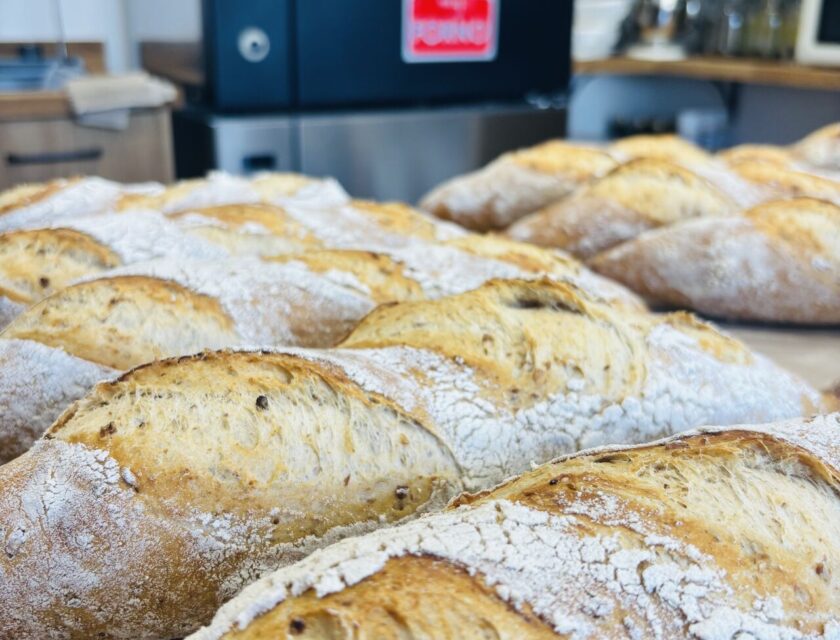
Sourdough September continued, and today we baked traditional sourdough baguettes.
The important part of this one is not an ingredient. It is the fermentation: these were held at 5 degrees overnight before baking.
Cold fermentation changes what the dough does with its time. At five degrees the yeast activity slows right down, so the dough is not racing towards over-proving — but the acid development carries on quietly in the background. You end up with hours of flavour building without the structure collapsing. That depth is not something you can add at the mixer. Time is the one ingredient in baking that cannot be substituted.
It also makes the dough far nicer to work with. A cold, rested dough is firmer under the blade, holds a cleaner score, and opens up properly in the oven — which is exactly what you want on a baguette, where the scoring is half the finished look.
And there is a practical argument that matters more than either. Cold fermentation lets a bakery split the work across two days. Mix and shape in the afternoon, hold overnight, bake for opening. That means genuinely fresh baguettes on the counter first thing without anyone starting in the middle of the night — which for a small bakery managing staff and hours is not a minor consideration.
For the crust we used a sweet malt from EDME Ingredients, which gives the extra crisp and colour you can see on the finished loaves.
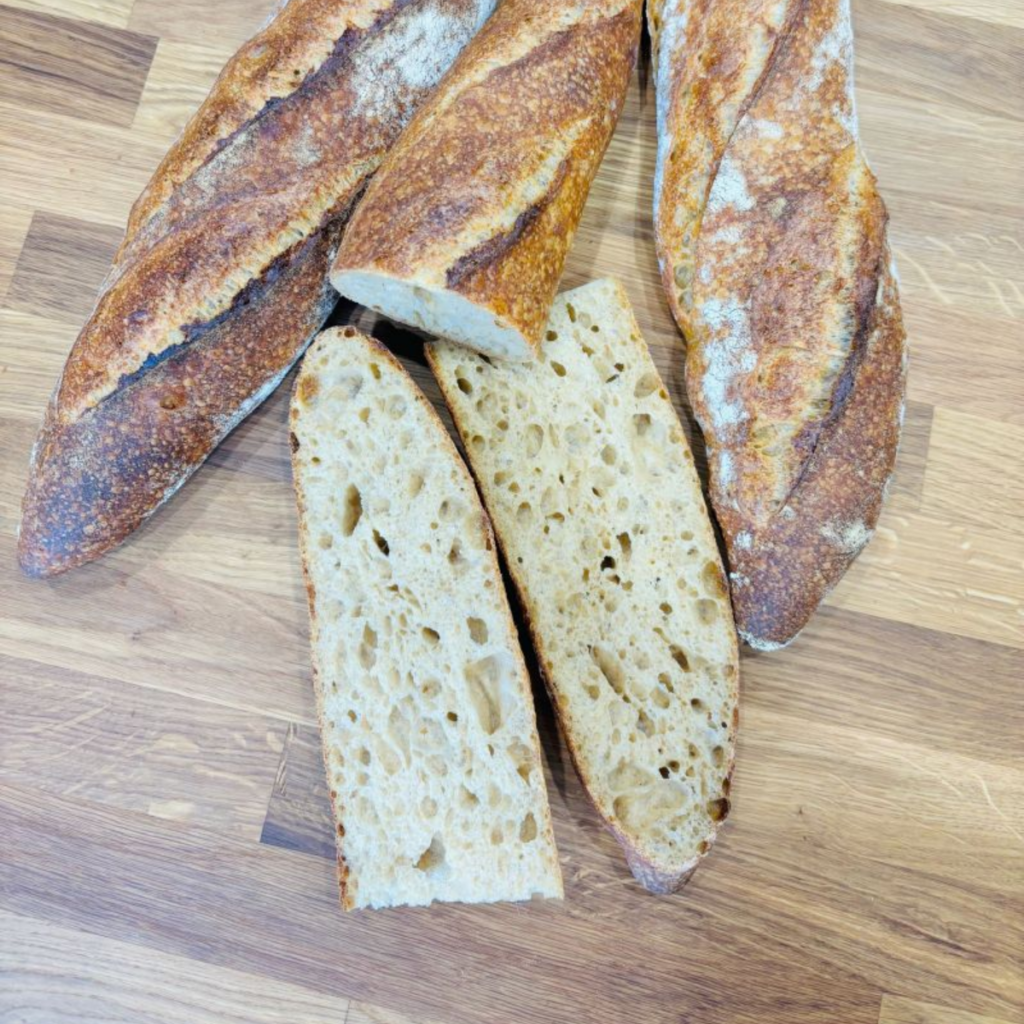
The crumb is the proof. Open, irregular, with that slight sheen through the cell structure that only comes from a long, slow ferment.
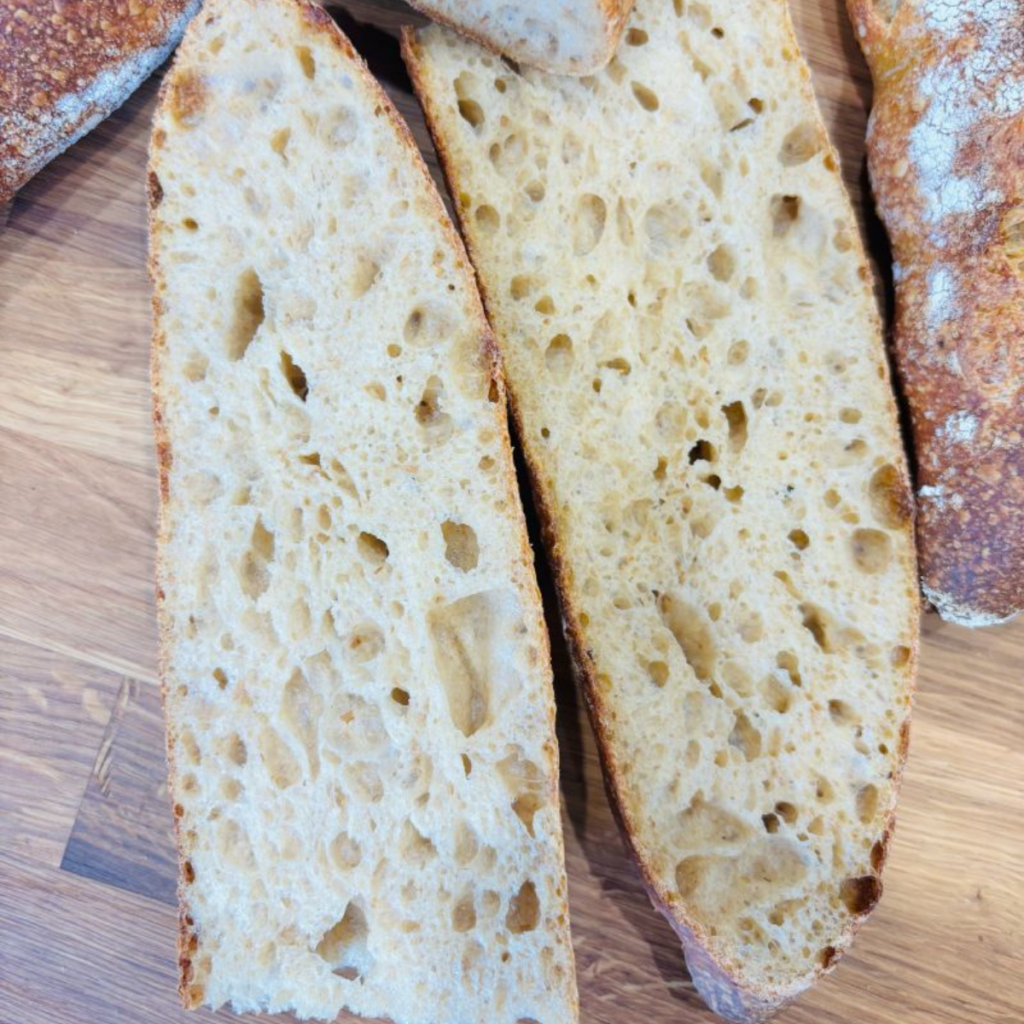
None of this is new. It is how baguettes were made before anyone was in a hurry.
“Time is the one ingredient in baking you cannot substitute.” — Lucas Fussnegger
Frequently Asked Questions
What is cold fermentation in bread making?
Cold fermentation means holding a dough at a low temperature — around 5°C — for an extended period, usually overnight. It slows yeast activity while flavour development continues.
Why ferment sourdough baguettes overnight?
An overnight cold ferment builds depth of flavour without the dough over-proving, and produces a firmer dough that scores cleanly and opens well in the oven.
Does cold fermentation change the crumb?
Yes. A long, slow ferment tends to produce a more open, irregular crumb with better developed structure than a short, warm fermentation.
Why add malt to a baguette recipe?
Sweet malt supports colour and crispness in the crust, giving a baguette a better crackle and a deeper finish.