Bakery InnovationFrom Lucas
Finally Out of the Oven
And finally they are coming out of the oven.
One dough, finished two ways. Some left plain, floured and scored. The rest rolled in seeds before proving — sesame on one batch, pumpkin on another. Both carry a 5% sweet malt inclusion from EDME Ingredients.
The seeding does more than change how they look. Seeds pressed into the surface toast in the heat of the oven, so you get a nuttiness on the crust that is not there in the plain version, and a different texture in the first bite before you reach the crumb. It is the same bread and a noticeably different eating experience.
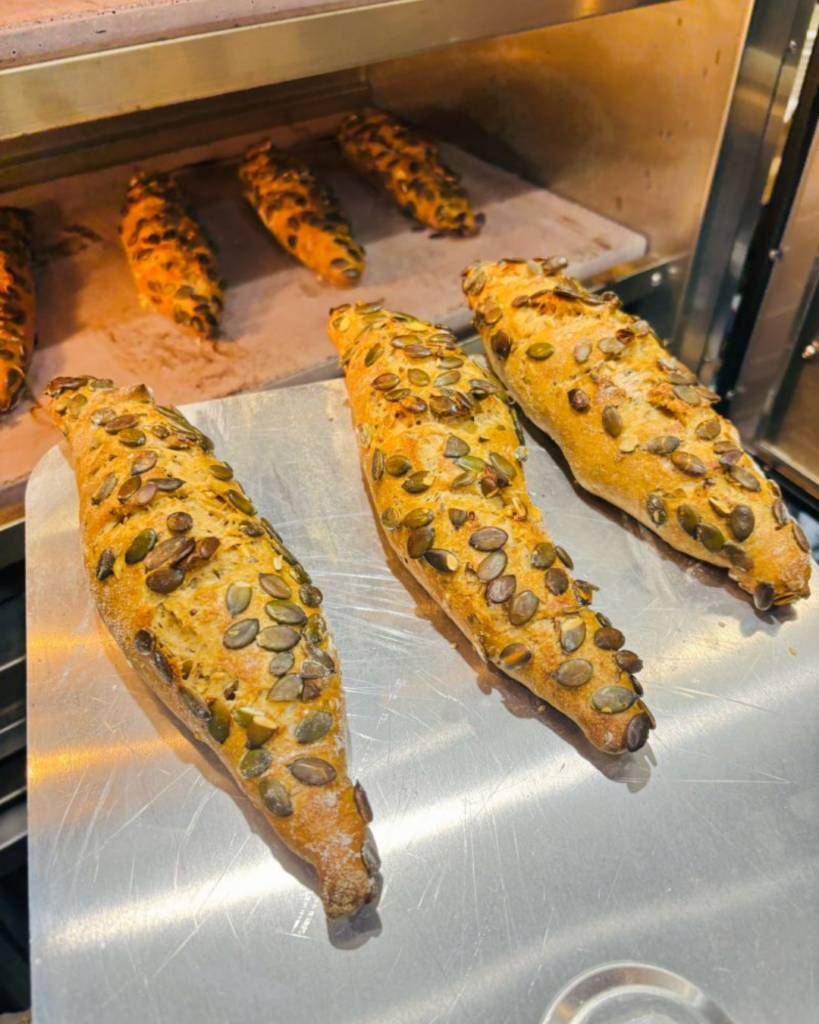
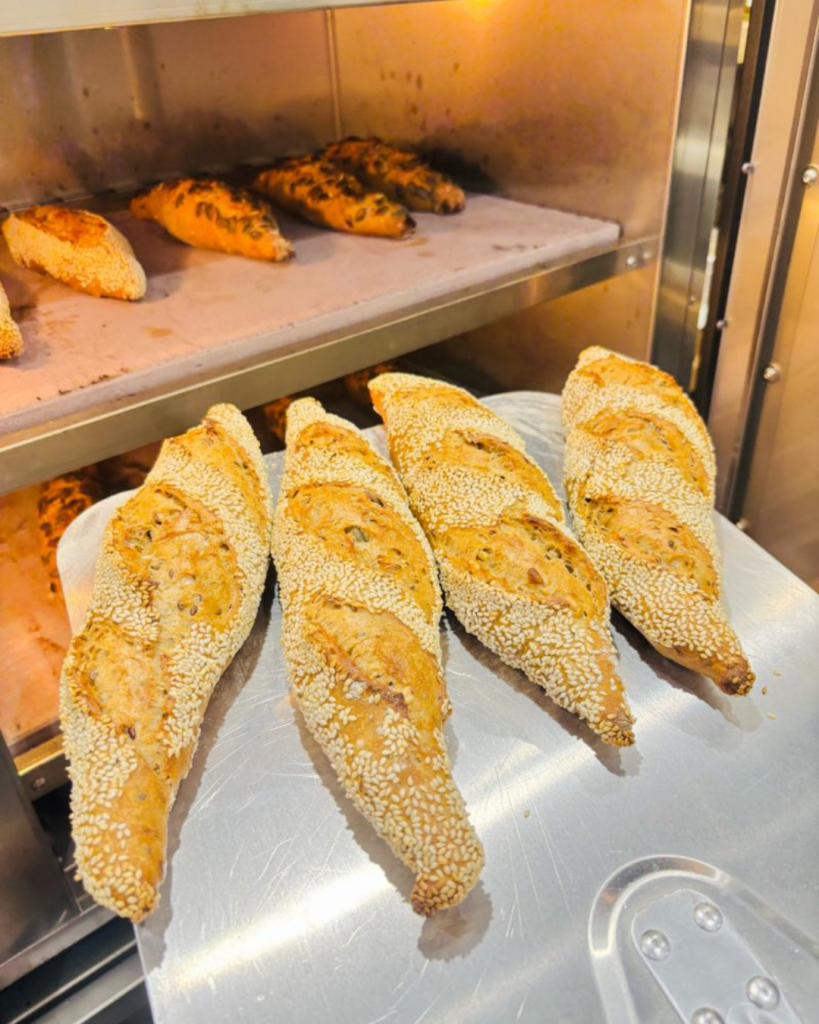
For a counter it also does something useful. Plain and seeded sitting side by side look like two products rather than one, and customers reliably pick a favourite — which means you sell more bread from a single mix and a single process.
The Beauty Inside
Then you cut one open.
Open, irregular, glossy where the cell walls catch the light. That is not something you can shortcut or fake. It is simply what a properly fermented dough looks like when it has been given the time it needs, and it is the part of the job that still gives me a lift every time.
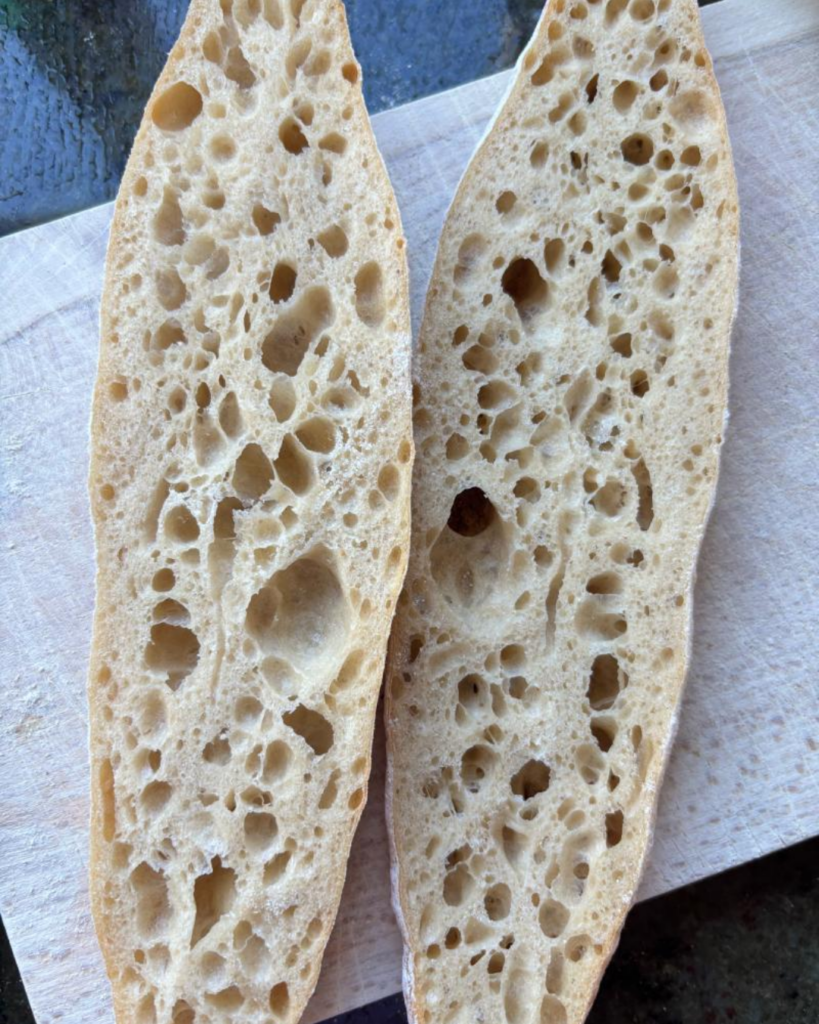
Can’t wait for breakfast.
“You cannot shortcut a crumb like that. It is what time in the dough actually looks like.” — Lucas Fussnegger
Frequently Asked Questions
How do you get seeds to stick to a baguette?
The shaped dough is dampened and rolled in the seed mix before proving, so the seeds hold through proving and baking rather than falling away in handling.
Do seeds change the flavour of a baguette?
Yes. Seeds on the surface toast during baking, adding a nutty flavour to the crust and a different texture in the first bite compared with a plain finish.
Why offer both plain and seeded from one dough?
It creates two distinct products on the counter from a single mix and a single process, without adding a separate recipe or production run.