Bakery InnovationFrom Lucas
It did not take long before I was asked to make that Oreo cake again.
That is worth paying attention to, because it is the only product test that really counts. Plenty of things get a good reaction the first time they come out of the oven. Far fewer get requested a second time, and a repeat ask tells you more about a product than any amount of polite feedback on the day.
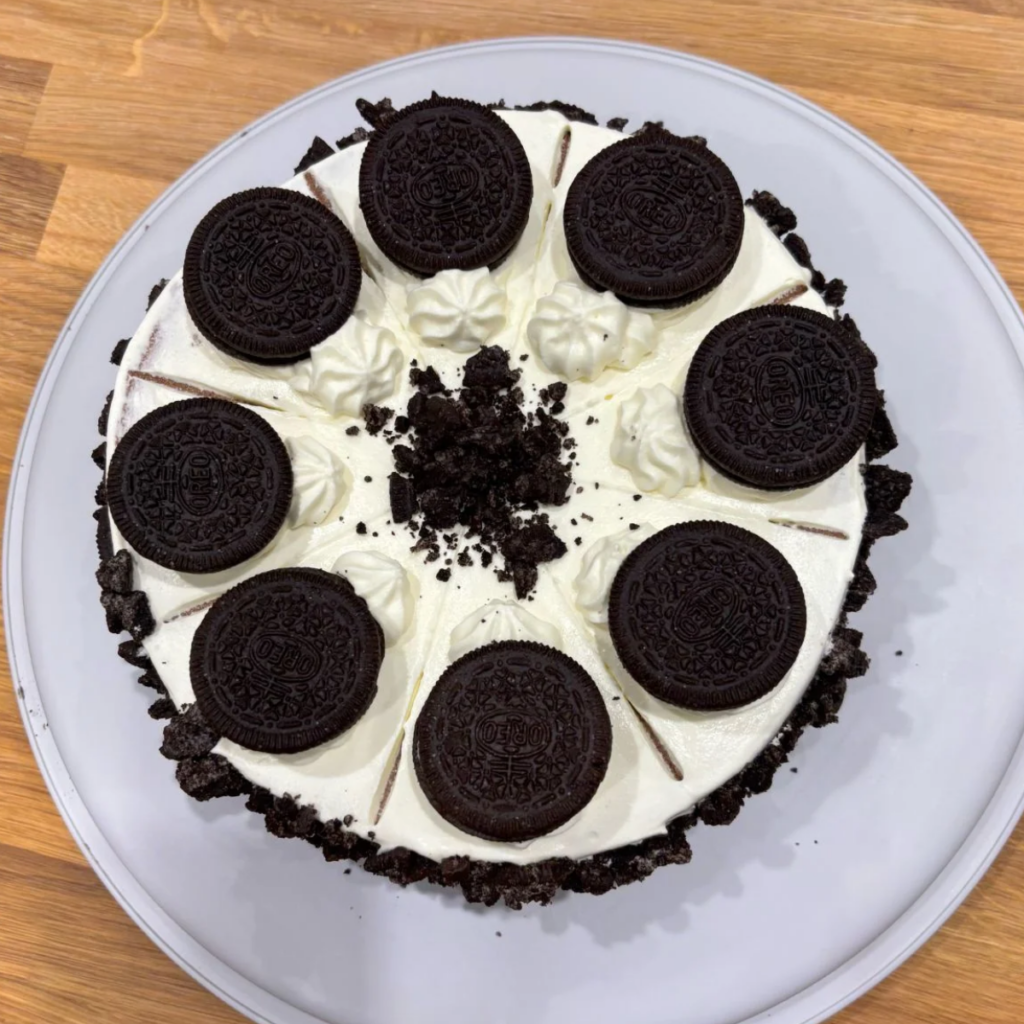
So rather than simply repeat it, I used the chance to change a few things.
The sponge was made with Wildfarmed patisserie flour this time. Wildfarmed grow their cereals using regenerative methods, and the provenance matters to me — but it has to perform first. A flour with a good story behind it that handles badly is no use to a bakery, and this one behaved itself properly in a sponge, which is where a flour has nowhere to hide.
The flavour came from a brand new chocolate flavour from I.T.S., who develop flavour systems for food manufacturers. Working with a flavour house is a different discipline from working with an ingredient — you are adjusting something quite precisely rather than simply adding it, and small changes travel a long way.
And the tin was released, as ever, with PR100 from DUBOR UK. A filled, layered cake has to come out of the tin cleanly and in one piece; there is no rescuing it afterwards.
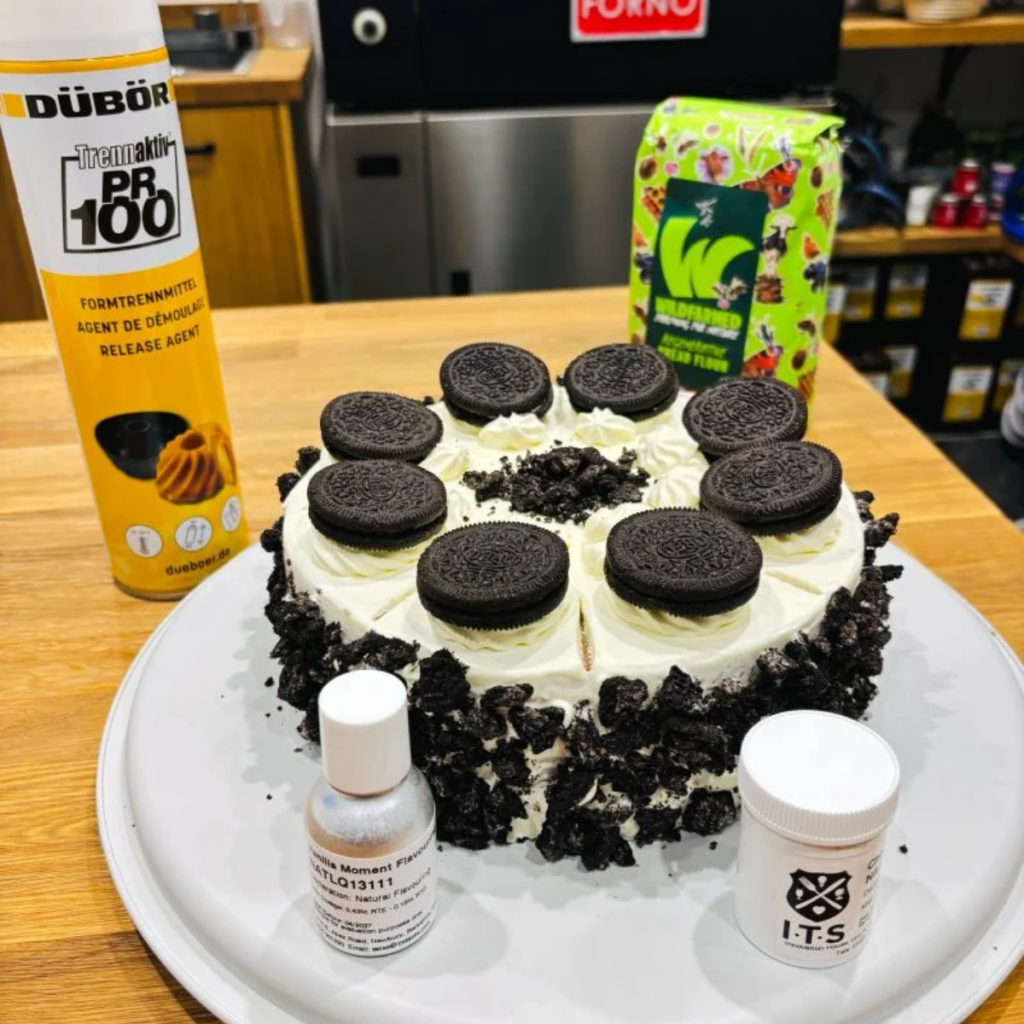
Same cake, three things different. That is usually how a recipe actually improves — not in one leap, but by changing a little each time somebody asks for it again.
“Plenty of products get a good reaction the first time. Far fewer get asked for a second time. That is the test that counts.” — Lucas Fussnegger
Frequently Asked Questions
What is patisserie flour?
Patisserie flour is a softer, lower-protein flour intended for cakes, sponges and pastry rather than bread. It produces a finer, more tender crumb than a strong bread flour would.
Does the flour make a difference in a sponge?
Yes. A sponge has very few ingredients and no strong flavours to hide behind, so the flour’s protein level and handling characteristics show up directly in the texture of the finished cake.
What does a flavour house do?
Flavour houses develop and supply flavour systems to food and bakery manufacturers, allowing a specific, repeatable flavour profile to be achieved consistently across production batches.
What is regenerative flour?
Regenerative flour is milled from cereals grown using farming practices intended to improve soil health and biodiversity, rather than conventional intensive methods.