From Lucas
The Best in the Business
This might look boring to some. A basket of plain rolls, no inclusions, nothing on top, nothing to photograph particularly well. But these rolls are the best in the business, and I would put them up against anything.
They are my Dad’s crusty rolls, with the rose moulding.
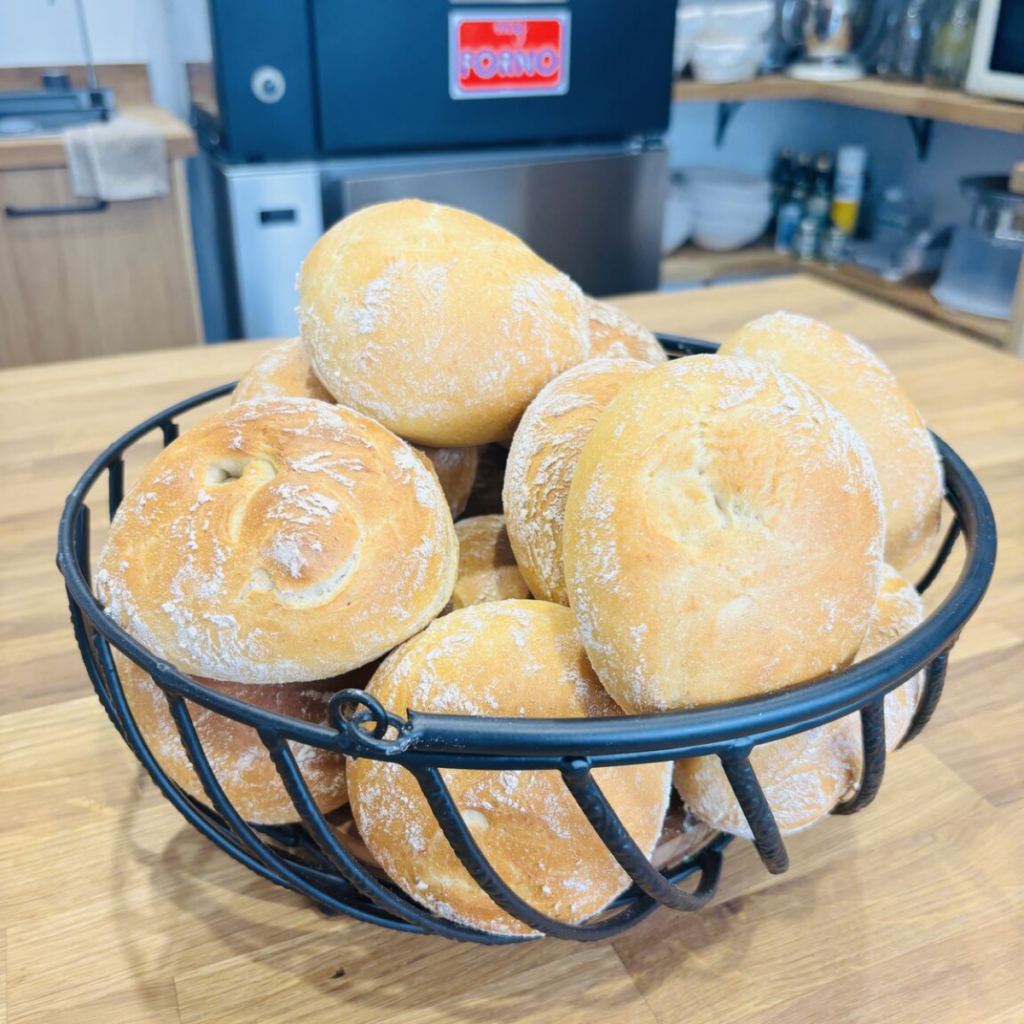
The recipe carries a small amount of rye flour and sweet malt from EDME Ingredients, which together give the crust its character and colour. Alongside that there is a small amount of fat and milk, working in the opposite direction — softening and enriching the crumb.
That opposition is the whole product. A crisp, crackling crust with a light, fluffy interior underneath it. Get the balance wrong in either direction and you have a roll that is either tough or bland. Get it right and you have something people come back for.
Then there is the moulding. The rose shape is hand-formed, and it is not a decoration added at the end — it is worked into the dough during shaping, which means it has to be done quickly, consistently, and the same way every time. It is one of those techniques that looks effortless when someone has made a few thousand of them.
I learned this roll from my father, in his bakery. Recipes like this are how a craft actually passes down — not written in a book, but shaped by hand next to someone who already knows.
And this is the thing about a plain roll: it has nowhere to hide. No topping to carry it, no filling to distract from it. Just flour, fermentation, shaping and bake. If any one of those is slightly off, everyone can taste it. Which is exactly why it is such a good measure of a bakery.
Let’s see how long they last.
“A plain roll has nowhere to hide. That is what makes it the honest test of a bakery.” — Lucas Fussnegger
Frequently Asked Questions
What is a rose moulded roll?
Rose moulding is a traditional hand-shaping technique that forms a rosette pattern into the top of a roll during shaping, rather than cutting or stamping it afterwards.
Why add rye flour to a white roll?
Even a small percentage of rye adds flavour and colour, and contributes to a crust with more character than white flour alone would give.
What does malt do for a bread crust?
Sweet malt supports colour development during baking and helps produce a crisp, well-coloured crust.
Why are fat and milk added to roll dough?
Small additions of fat and milk soften and enrich the crumb, giving a lighter, fluffier interior that contrasts with the crisp crust.